
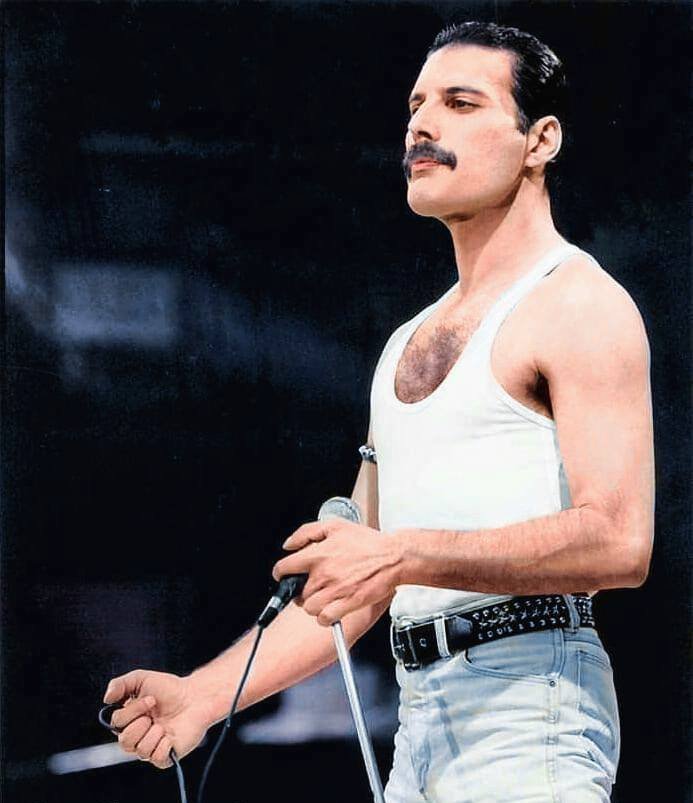
In one of rock music’s greatest what-ifs, Queen nearly didn’t perform at Live Aid.
According to Sir Brian May, speaking recently with Radio Times, the band initially had no intention of taking the stage at the historic charity concert on July 13, 1985, at Wembley Stadium. At the time, Queen were already seasoned veterans. They weren’t touring, had no upcoming plans to perform, and viewed the idea of squeezing 50 bands onto one stage as a logistical nightmare.
Freddie Mercury, never shy about voicing his instincts, summed it up bluntly:
“I don’t have a good feeling about this.”
Although Mercury was not officially the band’s leader, May explained that once Freddie made up his mind, changing it was nearly impossible. So Queen simply set Live Aid aside and carried on with their lives.
That is, until the momentum became impossible to ignore.
As weeks passed, ticket sales exploded and public anticipation reached a fever pitch. Behind the scenes, Bob Geldof, the relentless force organizing Live Aid, began calling repeatedly, urging Queen to reconsider. Inside the band, opinions were split. Roger Taylor was immediately enthusiastic, convinced they should be part of something so historic. John Deacon, however, remained unconvinced, and Freddie still wasn’t sold.
Then came the turning point.
During yet another call from Geldof, May found himself siding with Taylor. He turned to Freddie with a realization that would change music history:
“The band’s got to get the party on. If we woke up the day after Live Aid and we weren’t there, we’d feel terrible.”
Freddie paused — then made his decision in classic Mercury fashion:
“Fuck it, let’s do it!”
From that moment on, everything changed.
“Once he said yes, he took the lead,” May recalled. “He leaped like a lion.” Any hesitation vanished. Freddie threw himself into the performance with full force, laser-focused on making their limited time count.
Queen were given just 17 minutes. Geldof’s instructions were simple and strict:
“Don’t get creative. Just hit hits.”
Choosing from a catalog of 15 to 20 massive songs, the band built a setlist designed for maximum impact. Taylor insisted on opening with “Bohemian Rhapsody” and closing with “We Will Rock You” and “We Are the Champions.” The final lineup also included “Radio Ga Ga,” “Hammer to Fall,” and “Crazy Little Thing Called Love.”
The plan worked — almost too well.
Freddie’s spontaneous call-and-response moment with the audience stretched the set beyond its allotted time to 21 minutes, but no one dared stop it. In front of more than 72,000 fans at Wembley — and millions watching around the world — Queen delivered a performance so commanding it redefined what live rock could be.
Four veteran musicians walked onstage that day with modest expectations. They walked off having delivered what many critics, fans, and fellow artists still call the greatest live performance in rock history.
And to think — it almost never happened.