
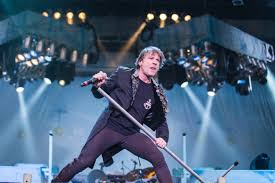

Bruce Dickinson, 64, Stuns Sofia With Orchestral “Tears of the Dragon” — Proving Age Is No Match for a Voice That Refuses to Fade
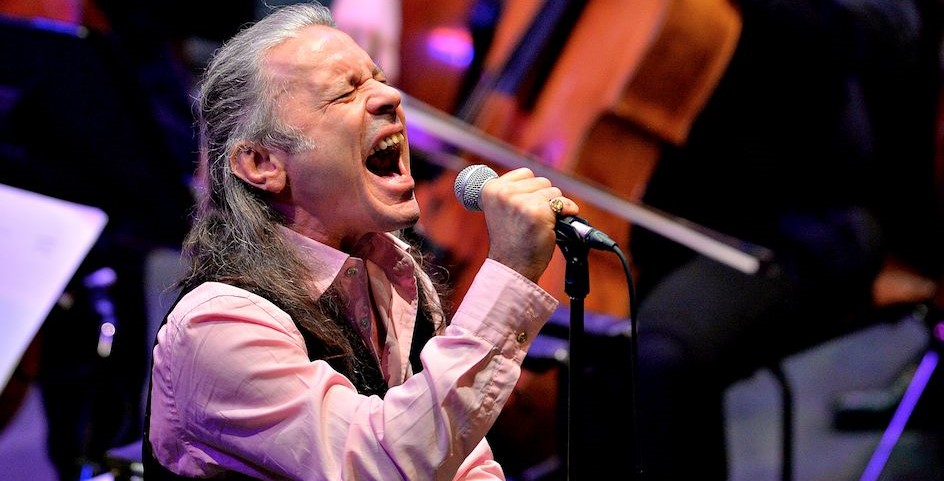
The lights dimmed inside the National Palace of Culture in Sofia, Bulgaria, on March 18, 2023. A hush fell over the crowd as the orchestra tuned their instruments. Then, slowly, a familiar figure stepped into the spotlight — Bruce Dickinson, legendary frontman of Iron Maiden, now 64 years old.
What followed was not just a performance. It was a revelation. Backed by a full orchestra, Dickinson delivered a breathtaking rendition of his classic solo anthem “Tears of the Dragon.” The moment his voice soared through the hall, fans erupted in disbelief. Powerful, resonant, and heartbreakingly emotional, his vocals sounded stronger than singers half his age. Many in the audience were left in tears, whispering that they had just witnessed history.

For longtime fans, the performance carried an even deeper meaning. Less than a decade earlier, Dickinson had been diagnosed with throat cancer — a devastating blow for a singer once nicknamed “The Air Raid Siren” for his operatic power. Few believed he could return to form. Yet here he was, standing tall, his voice cutting through the orchestra like steel wrapped in velvet. At 64, he wasn’t just holding his own — he was surpassing generations of 20- and 30-year-old vocalists still fighting to find their sound.
The orchestra brought new life to “Tears of the Dragon.” Sweeping strings and thunderous percussion elevated the haunting ballad into something cinematic. But it was Dickinson’s delivery — raw, defiant, and impossibly alive — that made the performance unforgettable. Each lyric carried the weight of a man who had battled mortality and emerged not just victorious, but renewed.
VIDEO BELOW 👇
Audience members described the night as “a spiritual experience.” Videos of the concert quickly spread online, with fans across the globe marveling that Dickinson, at 64, could still summon a voice of such magnitude. One viral comment declared: “He sounds better now than most of the kids trying to be rock stars today.”
In many ways, the concert was more than just music. It was a statement — that true artistry doesn’t age, it evolves. Dickinson’s voice, weathered yet unwavering, told a story of resilience and survival. Each note of “Tears of the Dragon” carried not only the song’s original melancholy but also the triumph of a man who refuses to be silenced.
As the final notes faded and the orchestra’s sound dissolved into silence, the hall rose as one. The ovation was thunderous, but it was also reverent. Fans knew they had just witnessed something that transcended time, genre, and age. Bruce Dickinson at 64 wasn’t just proving he could still sing. He was proving that legends never fade — they only grow stronger.