
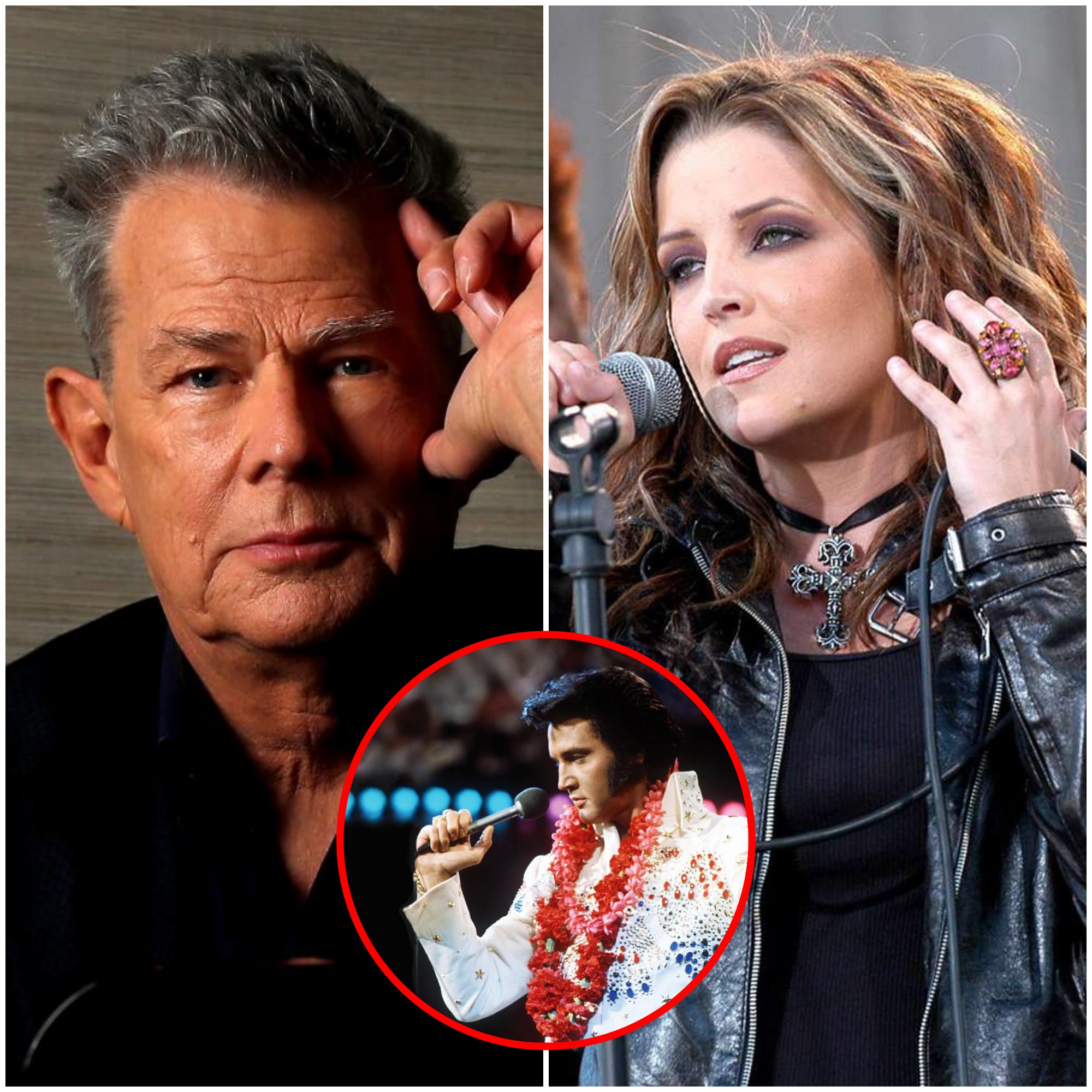
David Foster has spent a lifetime in recording studios, shaping and capturing some of the greatest voices in music history. From Whitney Houston to Celine Dion, he has heard it all. Yet nothing, he says, prepared him for the moment Lisa Marie Presley stepped up to the microphone and unknowingly summoned the presence of her father.
The session was meant to be meaningful but controlled — a vocal recording tied to Elvis Presley’s iconic “In the Ghetto.” What unfolded instead was something no producer, no matter how seasoned, could have anticipated.
:max_bytes(150000):strip_icc():focal(764x289:766x291)/Lisa-Marie-Presley-Life-04-011223-0171cfb8c4464393b0ebc05a29d32ca2.jpg)
As the instrumental track began to play, Foster recalls that the atmosphere in the studio didn’t merely shift — it vanished. The room grew unnervingly still, as if the air itself had been pulled away. Lisa Marie wasn’t performing with intention or imitation. She was simply singing.
Then Foster noticed something unsettling.
Her jaw began to move with a familiar, unconscious rhythm — the unmistakable physical cadence Elvis fans know by heart. Her breathing changed. A sharp, staccato intake of air emerged, followed by a deep, aching vibrato that sounded less like homage and more like inheritance.
What filled the room wasn’t mimicry. It was what Foster later described as a “genetic echo.”
The resemblance was so exact that the people in the studio froze. Conversations stopped mid-thought. Several grown men reportedly leaned against the walls, overwhelmed, as tears began to fall. For a moment, the distinction between father and daughter dissolved — and what remained felt uncomfortably close to the return of the King himself.
“I forgot I was recording his daughter,” Foster later admitted, his voice trembling as he recounted the moment. “It felt like Elvis was standing right there.”
The experience became too intense to continue. Foster made the decision few producers ever do in the middle of a take: he stopped the tape. Not because the performance was flawed — but because it was too powerful. Too real. Too heavy to process in real time.
Lisa Marie, by all accounts, was unaware of what she had just done. The transformation was raw and unconscious, a reminder that some things live deeper than memory or training. They live in blood, breath, and bone.
For Foster, it was more than a recording session. It was a confrontation with legacy — the haunting reality that Elvis Presley didn’t only leave behind music, but something far more elusive: a living resonance carried forward through his daughter.
Years later, Foster would describe the moment with a word rarely used in professional studios.
A miracle.
Not because it could be explained — but because it couldn’t.