
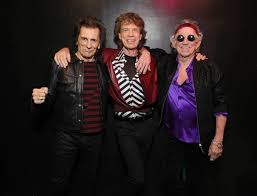
By 1964, the Rolling Stoneswere rising quickly and well on board the British Invasion. The band of young, angsty guys was known for their gritty take on American blues, but their management was keen to get them writing for themselves. At least, that was the goal. But when Mick Jagger and Keith Richards put pen to paper, their song actually became the debut single for someone else. “As Tears Go By” was unexpectedly wistful and not quite as hardcore as the Rolling Stones wanted to be. The song was redistributed to a 17-year-old Marianne Faithfull by the manager she shared with the Stones, Andrew Loog Oldham. The Stones returned to their composition pretty soon after, perhaps realizing they shouldn’t have dismissed it so quickly.
How “As Tears Go By” Came To Be
“As Tears Go By” was one of the earliest songs written by Mick Jagger and Keith Richards together. It was requested by their manager, Oldham, in an attempt to venture away from the American Blues songs that The Rolling Stones had relied on. At this point, they needed to expand their creativity and forge their own identity as a band. Legend has it that Oldham was so committed that he locked Jagger and Richards in a kitchen until the song was done, strictly requesting that the finished product was “a song with brick walls all around it, high windows and no sex.” Perhaps a big ask for a band who believed that “You start out playing rock ‘n’ roll so you can have sex and do drugs.”
The result of the kitchen lock-in was an unlikely tranquil ballad, laced with an unusual melancholy. It was certainly a step away from the edgy, rebellious reputation that The Rolling Stones had built up in their careers so far. Richards actually later confessed in his 2010 memoir, Life, that he and Jagger thought that this difference in sound was “a terrible piece of tripe.” But Oldham immediately pinpointed the potential it had to be a hit, contradicting Richards’ joke that they had written “money for old rope.”
Despite Richards’ gripes, there is a wonderful simplicity to the song that by no means devalues its depth. The line “It is the evening of the day, I sit and watch the children play” sets the scene of a normal life, one that is difficult to imagine for a rock star. Much more difficult than the swaggering image of “(I Can’t Get No) Satisfaction” or “Gimme Shelter.”
The fragility of the song seemed unlikely for the young rockers, and Faithfull admitted in her autobiography that “God knows how Mick and Keith wrote it or where it came from … It is an absolutely astonishing thing for a boy of 20 to have written a song about a woman looking back nostalgically on her life.” It’s no surprise the song was given to a more ethereal voice that would be a much better fit for the song than the masculine roughness of the Stones.
Marianne Faithfull’s Version
The completed song was given to Marianne Faithfull by Oldham as her debut single in 1964. Her version of “As Tears Go By” sounds full and wonderful, and the English horn used is distinctively charming. The song was initially only supposed to be a B-side, but its charm quickly overtook its companion track. So, it was reissued as an A-side, and Faithful saw her release head into the Billboard Hot 100, where it stayed for nine weeks, peaking at number 22.
“As Tears Go By” sounds so perfect for Faithfull that it’s become something of a debate whether the song was written specifically for her by Jagger and Richards or not. In her 1994 autobiography, Faithful clears any confusion, sharing that “‘As Tears Go By’ was not, contrary to popular folklore, written for me, but it fitted me so perfectly it might as well have been.” Her soft voice lent the somewhat woeful song a bespoke grace that indeed makes it so suited to her.
The Rolling Stones’ Release
Following the success of Faithfull’s release of “As Tears Go By,” the Rolling Stones revisited their song. In 1965, the band recorded their own version with a different arrangement than Faithfull. They bid goodbye to the English horn that was so defining of Faithfull’s version, and as a result, it actually feels much lighter. The vocals are much clearer and placed further in the foreground than Faithfull’s voice, and its string focus feels more vulnerable and perhaps more melancholic than its previous release.
Billboard labeled the Rolling Stones’ version as a “beautiful folk-flavored ballad… a baroque, semi-classical smash hit.” Not bad. Released on December’s Children (And Everybody’s), the song was a way to display a more tender, unplugged version of the band. Despite the recording being a clear outlier in their classics, “As Tears Go By” does showcase their versatility well. It could be the case that the Rolling Stones themselves perhaps considered the song an anomaly for them, as they actually never performed “As Tears Go By” live until 2005, 40 years after its release.
“As Tears Go By” may not hit with the same tenacity as some of the Stones’ biggest hits, but its legacy is a fascinating oddity. Marianne Faithfull showed how songs of vulnerability can have an infectious edge. The Stones showed that vulnerability can still be pretty rock and roll. Their, quite frankly, lovely songwriting never tethered their raucous image, and in fact just cemented their abilities as musically apt and adaptable stars, even at their young ages. How the Stones melded the song into a completely different, folk-y texture was a genuinely brave move in expressing a deeper sense of melancholy within their angst. And it’s exactly that multifaceted intrigue that defines the endurance of the Rolling Stones, Marianne Faithfull, and “As Tears Go By.”