
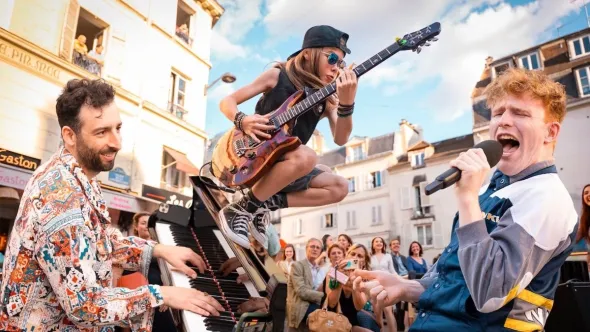
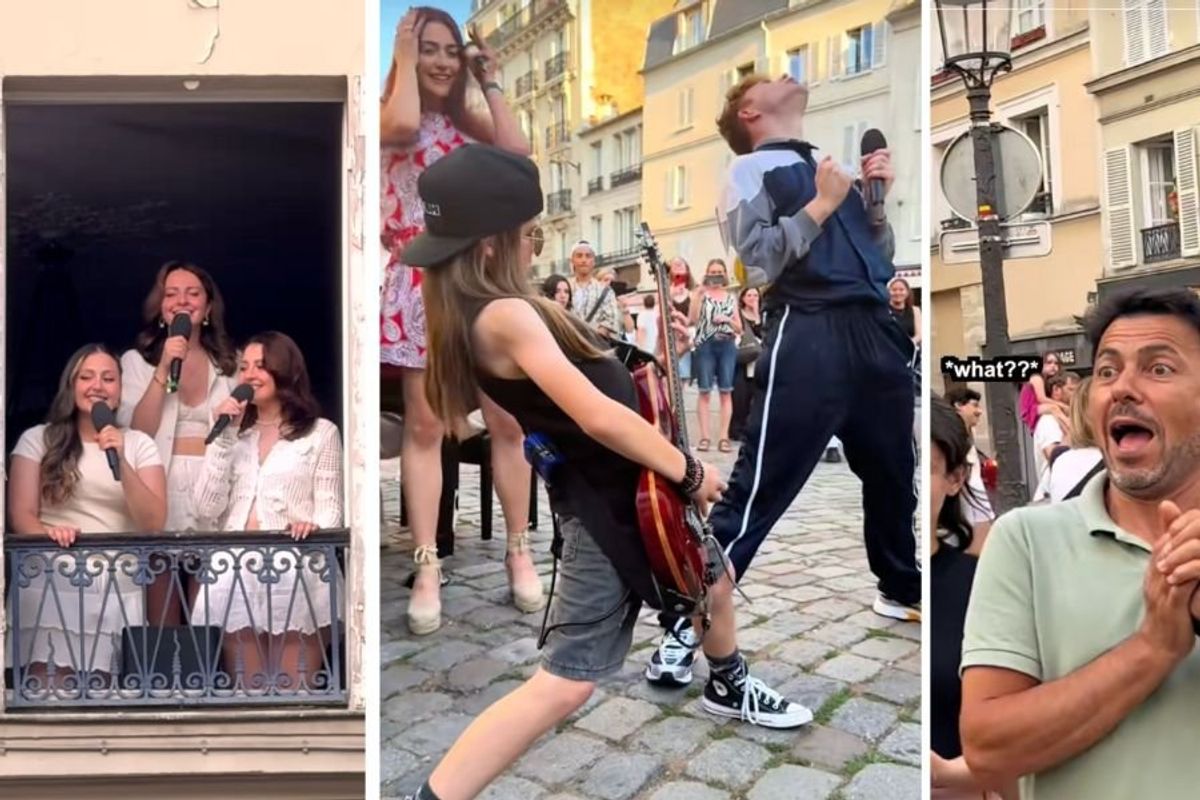
In a city famed for its art and culture, a spontaneous flash mob in Paris recently turned heads and captured hearts worldwide with a breathtaking cover of Queen’s Bohemian Rhapsody. Within just over ten days, the video of the performance amassed more than 500 million views, drawing fans from across the globe and earning praise as the “Phenomenon of the Year.”
The performance unfolded like a piece of immersive theatre. On the streets of Paris, window shutters opened to reveal three women clad in white, their voices weaving the iconic opening lines, “Is this the real life…” A pianist appeared seemingly from nowhere, joined by additional singers in other windows. Then, a blonde man in a horse-drawn carriage belted “Mama, just killed a man…” with such power that it seemed Freddie Mercury himself would have been proud. Among the thirty musicians and vocalists participating was 11-year-old guitar prodigy Olly Pearson, whose solo added an electrifying energy to the ensemble.
Julien Cohen, the pianist and mastermind behind the flash mob, orchestrated a performance that combined technical precision with theatrical flair. Cohen’s social media is dedicated to duets and collaborations with talented musicians, many of which have gone viral. For this event, he brought together a star-studded lineup, including Mickey Castillo, lead singer, often compared to Mercury, and Olly Pearson on guitar. The group also featured French pop trio DDKN, operatic choir members, and other vocalists and instrumentalists, each contributing to the spectacle’s layered sound and visual drama.
From start to finish, the performance captured the essence of Bohemian Rhapsody. Michaël Koné delivered the soaring “Galileo” section with operatic intensity, while Martin Pennec’s unexpected drum entrance added dynamic momentum. Axel Thomas and Paul Pasmanian anchored the arrangement with guitar and bass, and the operatic choir, including singers such as Eeva Matilda and August Chevalier, enriched the piece with depth and harmony. Every note, every entrance, and every vocal layering reflected meticulous planning and artistic passion.
Fans watching online described the moment as magical, inspiring, and profoundly moving. Many expressed awe at the scale and spontaneity, commenting on social media that it felt like witnessing Queen live. Beyond its musical brilliance, the performance reminded viewers of the power of collaboration and human connection. It celebrated not only Queen’s enduring legacy but also the joy and inspiration that come from creating art together.
The Paris Bohemian Rhapsody flash mob is more than a viral video—it is a testament to the timeless appeal of Queen’s music and the creativity of a new generation of performers. In an era dominated by screens and fleeting attention, this event offered a rare experience of shared artistry and emotional resonance, proving that music has the power to unite, inspire, and transform a simple public square into a global stage.