
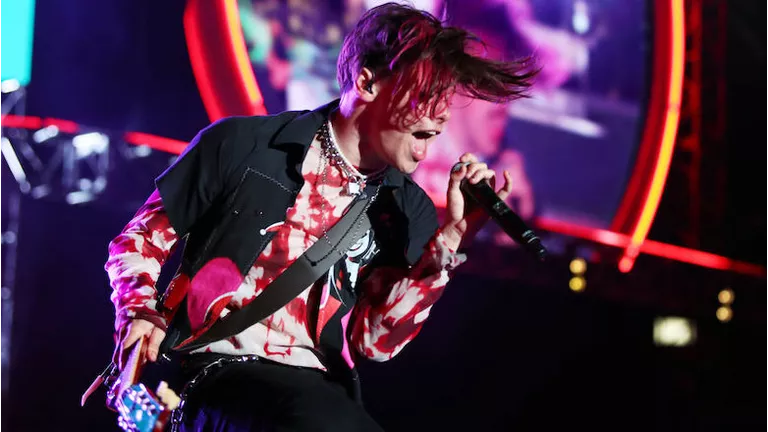

Draped in a rainbow flag, he stopped the music, silenced the crowd, and spoke words that cut straight to the heart: “You never need to apologize for being yourself.”
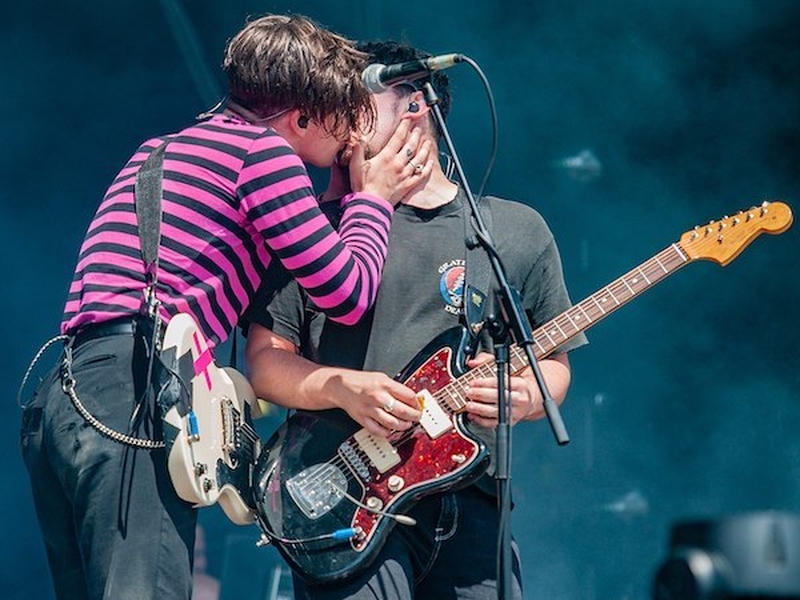
In that instant, the concert was no longer just a show. It became a sanctuary. Yungblud leapt into the crowd, wrapping his arms around a group of queer fans who were trembling, tears streaming down their faces. What could have been just another festival anthem transformed into something far greater — a declaration that this space, this moment, belonged to everyone who had ever felt different, judged, or unseen.
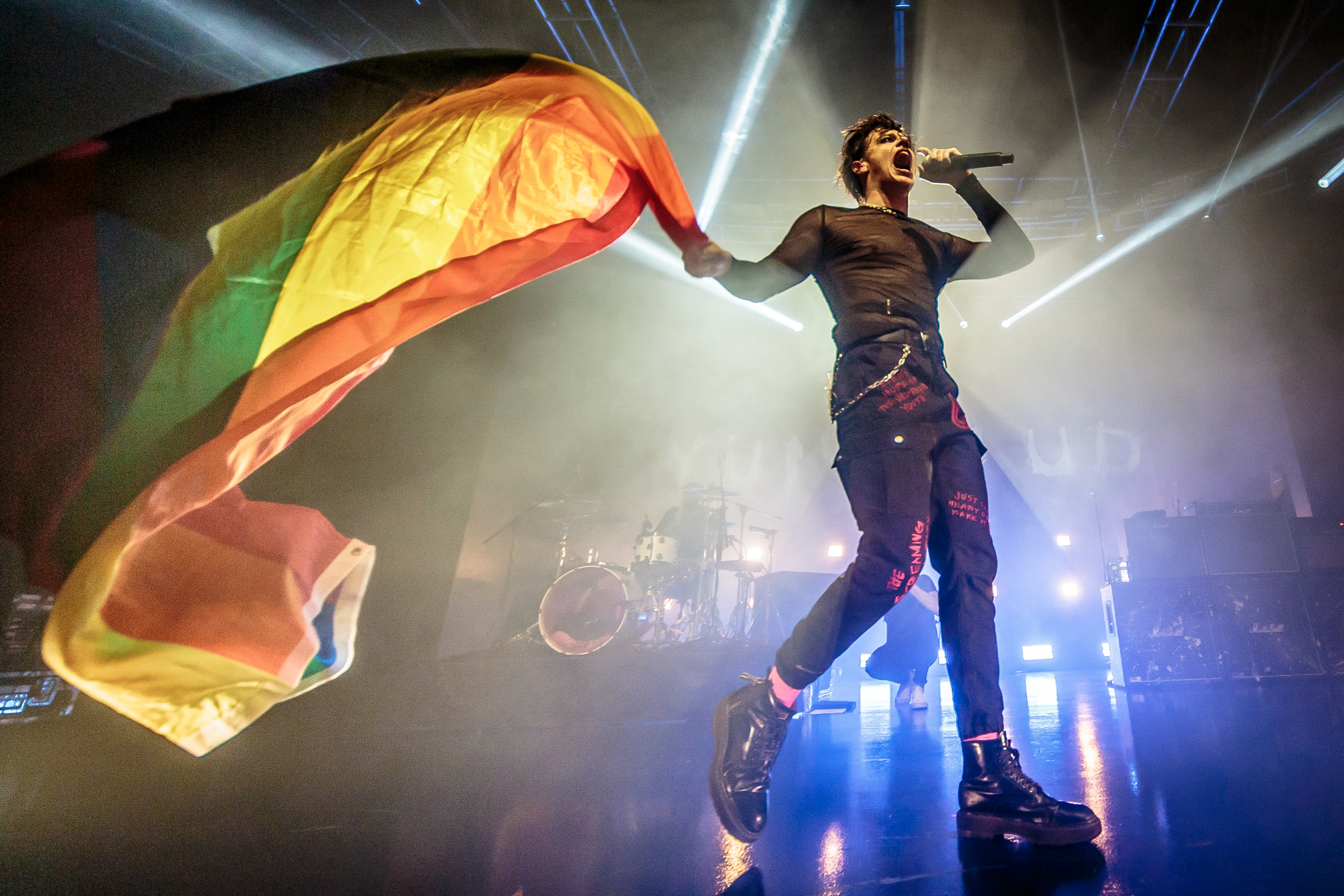
The stage lights flickered, the music paused, and thousands of voices swelled into cheers that carried both defiance and relief. Fans held each other, strangers turned into allies, and the venue itself seemed to expand into a safe haven. Yungblud didn’t just perform in Berlin; he built a temporary home where authenticity wasn’t just accepted, it was celebrated.

For those who were there, it wasn’t just a concert memory. It was a reminder that music has the power to do more than entertain — it can protect, uplift, and give people the courage to live unapologetically. In Berlin that night, Yungblud gave his fans something they would carry long after the echoes of the festival faded: the radical permission to be themselves, fully and without apology.